




...

Category: Uncategorized

Why Brands Trust a Video Production Company Lebanon

Video production company lebanon: A Strategic Guide for 2026 Brands

The digital communications landscape in Lebanon has reached a critical inflection point as the market approaches 2026. The convergence of high-speed mobile connectivity, a hyper-active social media consumer base, and a resilient entrepreneurial spirit has transformed video production from a supplementary marketing expense into the primary engine of brand authority and consumer trust. For enterprises operating within the economic corridors of Beirut, Hazmieh, Naccache, and Jbeil, the ability to produce high-fidelity, narratively compelling video content is no longer a luxury it is the baseline for institutional survival in an increasingly algorithmic marketplace.

Future Trends and the Evolution of Video ROI in 2026

As the global video marketing industry matures toward 2026, the metrics of success have shifted from superficial engagement to deep conversion and long-term brand equity. The global video marketing market is projected to reach $135 billion by 2026, with a compound annual growth rate (CAGR) of 18.4% through 2030. In Lebanon, this growth is mirrored by a social media penetration rate that now exceeds 78%, where platforms such as TikTok, Instagram, and YouTube have become the primary research tools for consumers before making a purchase.

The return on investment (ROI) for video in 2026 is driven by its unique capacity to influence the entire marketing funnel simultaneously. Research indicates that 82% of marketers now report that video delivers a positive ROI, with 87% confirming that video content has directly increased sales. This is particularly relevant in the Lebanese context, where the economic crisis has forced businesses to demand measurable results for every dollar spent on creative services.

The Dominance of Vertical and Short-Form Content

By 2026, video content is expected to represent 82% of all global internet traffic. This volume is largely propelled by the “vertical-first” revolution. Short-form videos under 60 seconds generate 2.5 times more engagement per impression than any other content type. For Lebanese brands, this means that the production of vertical reels and TikTok-style content is no longer an afterthought but a central pillar of the creative strategy.

Video Format Metric (2026 Forecast) Short-Form (<60s) Mid-Form (2-5 mins) Long-Form (Anchor)
Average Completion Rate 85% 45% 22%
Consumer Preference (Discovery) 73% 18% 9%
Engagement Rate per Impression 50% 12% 5%
Primary Channel TikTok, Reels LinkedIn, YouTube Website, Webinars

The Two-Speed Video Strategy

In 2026, the most successful brands in Lebanon employ a “two-speed strategy” that balances high-frequency vertical clips for reach with high-trust “anchor” videos for conversion. This approach recognizes that while short-form content drives the top of the funnel, it is the longer, more detailed content that builds the institutional trust required for high-value transactions, particularly in the B2B and luxury sectors.

The “Capture Once, Ship Everywhere” methodology has become non-negotiable for 2026 brands. A single high-quality production day can now yield a suite of assets:

  1. One 10-minute “Anchor” video for YouTube and the company website.
  2. Three 60-90 second “Mini-Tutorials” for LinkedIn and professional feeds.
  3. Six 15-45 second “Shorts” for TikTok and Instagram algorithmic reach.
  4. A teaser campaign for programmatic advertising.

AI-Assisted Production and the Cost Compression

The integration of artificial intelligence into the video workflow has fundamentally altered the economics of production. Between 2024 and 2026, AI video generation volume grew by 840%, allowing brands to produce content at approximately 9% of the cost of traditional methods. For Lebanese companies, this has reduced the barrier to entry for video marketing. AI tools are now routinely used for script generation, automated captioning, and even real-time localization and dubbing for regional export markets like the GCC.

However, the trend for 2026 shows that while AI can handle the “baseline” of content generation, premium brands are doubling down on human creative judgment to avoid the generic feel of fully automated content. The strongest ROI is found in videos that use AI as a technical partner for clip searching, background cleanup, and multi-platform versioning while maintaining a human-centric narrative.

Corporate Documentaries: Building Brand Trust in the Lebanese Market

In a marketplace characterized by economic volatility and social transformation, “trust” has emerged as the most critical currency for Lebanese brands. Corporate documentaries have become the preferred medium for institutions to communicate their values, history, and resilience. Unlike traditional commercials, which are often viewed with skepticism, the documentary format leverages authenticity to forge deeper emotional connections with the audience.

The Psychology of Documentary Storytelling

The effectiveness of the corporate documentary is rooted in the psychology of brand trust. Trust is established when a partner or a brand is seen as reliable, predictable, and concerned with the audience’s needs. Documentaries achieve this by providing behind-the-scenes access, showcasing real employees instead of actors, and focusing on “real people, real impact, and real purpose”.

For Lebanese brands, the documentary format is a powerful tool for “legitimacy building.” Research on Lebanese social enterprises indicates that storytelling is vital for acquiring community support and trust, particularly when competing with international commercial entities. By highlighting their commitment to local economic recovery and social responsibility, brands can turn passive customers into active advocates.

Strategic Benefits of the Documentary Format

Documentaries are increasingly used by Lebanese firms to address several key business objectives:

  1. Trust and Credibility: Showing leadership vision and operational excellence establishment institutional authority.
  2. Emotional Connection: Documenting struggles, breakthroughs, and the “human side” of the business drives brand loyalty.
  3. Employer Branding: Helping current and prospective employees understand the “why” behind the company increases engagement and retention.
  4. Stakeholder Communication: Providing clear evidence of impact for investors and community partners.

Case Study: Resilience and Transformation

Examples of high-impact corporate filmmaking in Lebanon often focus on sectors that serve as economic buffers. The industrial sector, for instance, which counts over 18,542 units as of 2024, has utilized video to document its adaptation to currency collapse and energy costs. Similarly, the FMCG sector has used documentary-style panels to explore how digital innovation and FinTech are revolutionizing manufacturing and distribution in a struggling economy.

Sector Documentary Style Strategic Impact
Banking & Finance Resilience and Digital Innovation Rebuilding trust and showcasing institutional excellence.
Industrial / MFG “Made in Lebanon” Operational Excellence Supporting exports and bringing in foreign currency.
Luxury / Automotive Heritage and Craftsmanship Connecting with the diaspora and wealthy regional clients.
Social Enterprise Impact Mission and Community Growth Gaining legitimacy and attracting tangible resources.

For a premium brand experience, visit the(https://gmmstudios.me/) to see how cinematic storytelling is applied to modern Lebanese enterprises.

Pricing Packages: Navigating Video Production Costs in Lebanon

Selecting a video production partner in Lebanon requires a clear understanding of the pricing models that dominate the 2026 market. The economic landscape has forced a bifurcation of the industry: high-volume, AI-assisted content providers and high-end, cinematic production houses. Most reputable agencies in Beirut and surrounding areas now offer tiered packages designed to match the specific growth stages of a business.

Standard Production Tier Analysis

The following data reflects typical pricing structures for digital marketing and video production services in Lebanon as of 2026.

Package Tier Estimated Monthly/Project Cost Typical Inclusions Ideal For
Starter (Entry) $900 – $3,800 4-6 social posts, basic vertical clips, light motion graphics, and basic SEO. Startups and Local SMEs (e.g., in Jbeil or Beirut).
Growth (Mid) $3,800 – $7,500 12-15 multi-channel posts, 1-2 hero campaigns, performance tracking, and CRM integration. Rapidly growing firms (e.g., in Hazmieh or Naccache).
Enterprise (Premium) $8,500 – $25,000+ Full-funnel strategy, cinematic brand film, multi-market campaigns (GCC/EU), and dedicated creative squad. National brands, Luxury retailers, and Export-focused industrial firms.

Service-Specific Pricing Factors

While packages provide a baseline, specific video types carry different production complexities. In the Lebanese market, hourly rates for skilled professionals including videographers, editors, and creative directors can range from $20 to $150 depending on expertise and equipment requirements.

  1. Product Explainer Videos: Often priced per project, ranging from $1,000 to $5,000 depending on whether they are live-action or animated.
  2. Corporate Interviews and Podcasts: Studios like gmmSTUDIOS provide soundproofed environments with professional multi-camera setups, typically starting at competitive hourly or session-based rates.
  3. Event Coverage: Real-time social media coverage for events in Beirut or Hazmieh involves rapid editing and delivery, often requiring a dedicated team on-site.

For more detailed breakdowns on service types and technical specifications, brands are encouraged to explore the(https://gmmstudios.me/gmmstudios-insights-latest-trends/).

The High Cost of ‘Cheap’ Video Production: A Warning for Premium Brands

In a budget-constrained economy, the temptation to opt for the lowest-cost video provider is significant. However, research into the 2026 production landscape suggests that cutting corners in video production often leads to “negative ROI,” where the resulting content actively damages brand perception and requires expensive corrective measures.

1. Equipment and Technical Failures

Trimming the gear list is a common budget-saving tactic that frequently backfires. For instance, swapping professional stabilizing equipment for cheap tripods or gimbals often results in shaky footage that is unusable without hours of expensive post-production stabilization. High-end commercial content requires professional lighting and grip equipment; without it, crews work slower and struggle to maintain visual consistency, leading to rushed setups and subpar visuals.

2. The “One-Man Crew” Trap

While lean teams can be efficient for micro-content, overloading a single individual with the roles of director, cinematographer, audio mixer, and script supervisor often leads to burnout and critical errors. Missing a continuity detail or suffering from poor audio quality on a set where the subject is a high-profile executive can necessitate full-day reshoots, doubling the original budget.

Budget Cut Category “Saving” on Paper The Real Cost / Resulting Risk
Skimping on Audio Assist $300 – $500 Poor sound quality requiring costly post-audio repair or reshoots.
No Hair & Makeup $150 – $300 Expensive post-production skin retouching and blemish removal.
Skipping Script Supervision $400 – $700 Narrative disconnects that make the edit confusing or require new footage.
Using Low-End Gear $500 – $1,500 Dated look that signals “unreliable” to premium consumers.

3. The Myth of “Fixing It in Post”

Post-production is often billed at premium rates. Every hour an editor, colorist, or VFX supervisor spends fixing a mistake that should have been addressed on-set is an hour where the brand is paying for correction rather than creation. For premium brands in locations like Naccache or Beirut Downtown, where competition for attention is fierce, a low-quality video is more than a missed opportunity it is a PR risk that suggests the company lacks attention to detail.

4. Global Inconsistency and Local Vetting

For brands targeting the Lebanese diaspora or regional markets, using budget freelancers without proper vetting often leads to a 60% higher chance of falling behind schedule. Furthermore, budget constraints can complicate efforts to maintain brand consistency across different regions, as localized video production may face severe constraints without a centralized production partner.

The gmmSTUDIOS Roadmap: A Systematic Approach to Production Excellence

To ensure that brands in Lebanon achieve a measurable return on their video investment, gmmSTUDIOS has developed a standardized production roadmap. Since its inception in Hazmieh in 2023, the studio has expanded to Naccache and Tripoli, serving over 400 clients with a workflow that integrates cinematic quality with algorithmic efficiency.

Phase 1: Strategic Discovery and Scripting

Every project at gmmSTUDIOS begins with a “discovery” process that aligns the video’s messaging with the brand’s business goals. This includes defining a single measurable KPI such as increasing website dwell time, boosting leads, or educating customers before any filming occurs.

  • Scriptwriting and Storyboarding: Professional scripts are crafted to ensure the narrative drives the viewer toward a specific action.
  • Teleprompter Support: To ensure that executives and brand representatives deliver their message with confidence and clarity, reducing the number of takes and time on set.

Phase 2: Cinematic Production and Shooting

The shooting phase is characterized by broadcast-quality execution. gmmSTUDIOS utilizes three remotely controlled cameras and professional lighting to handle the entire production lifecycle.

  • Specialized Filming Sets: Tailored environments such as “Kitchen Shooting” for F&B brands and soundproofed podcast studios for B2B thought leadership.
  • Social Media Event Coverage: A dedicated team captures corporate gatherings and launches in real-time, providing rapid-turnaround content to maximize engagement while the event is live.

Phase 3: Post-Production and Modular Delivery

The final phase transforms raw footage into a polished suite of assets. gmmSTUDIOS leverages AI solutions for generating assets and creating automated workflows, ensuring faster delivery without sacrificing quality.

  • Editing and Graphics: Precise video editing, custom graphics, and titles designed to capture attention within the first 3 seconds.
  • Platform Optimization: Content is delivered in multiple versions and aspect ratios (9:16 for Reels/TikTok, 16:9 for YouTube, 1:1 for social feeds) to maximize ROI across all channels.

Strategic Growth through Local Expertise

The success of the gmmSTUDIOS roadmap is evident in its growth metrics. The studio averages 40+ new customers per month and maintains over 80 active clients with a 60% renewal rate. By focusing on “capturing emotions and crafting stories” that serve a purpose, the studio has become a cornerstone of the Lebanese creative ecosystem.

Regional Strategic Analysis: Beirut, Hazmieh, Naccache, and Jbeil

To maximize SEO relevance and brand impact, video production must be tailored to the specific business environments of Lebanon’s key economic hubs.

1.Hazmieh: The Hub for Investment and Retail

Hazmieh has successfully positioned itself as an essential hub for regional and global company showrooms, particularly in the automotive and retail sectors. With the “Everything under one roof” business model, Hazmieh attracts a diverse demographic of investors and consumers.

  • Video Strategy for Hazmieh: Brands here should focus on “convenience” and “transparency.” Video tours of showrooms (e.g., Toyota, Lexus, GMC) and customer testimonials that emphasize the ease of doing business in Hazmieh are highly effective.
  • Local SEO Tip: Use keywords like “reliable services in Hazmieh” and “Hazmieh business hub” in video metadata to capture local search intent.

2. Naccache: The Luxury and Lifestyle Corridor

Naccache has emerged as a premium destination for luxury automotive brands and high-end experiences. The presence of “RYMCO City 2” on the main highway, housing brands like Hongqi and McLaren, sets a high bar for visual communication.

  • Video Strategy for Naccache: Cinematic quality is paramount. Short-form “lifestyle” content that showcases luxury, innovation, and exclusive events (e.g., the launch of new EV models) resonates with the affluent resident and diaspora base.
  • Engagement: Interactive and shoppable video elements are increasingly effective for Naccache-based luxury retailers looking to convert digital interest into physical showroom visits.

3.Jbeil (Byblos): Tourism, Heritage, and Entrepreneurship

Jbeil represents a unique blend of ancient history and a thriving modern startup scene. From the iconic Jbeil Christmas Tree to the concentration of digital marketing agencies, Jbeil is a hub of creative innovation.

  • Video Strategy for Jbeil: Leveraging the city’s heritage through “outdoor shooting” and “lifestyle documentaries” helps local brands stand out. Content that highlights the resilience of Jbeil’s entrepreneurs (“Despite it All”) performs well across national and international platforms.
  • Local SEO Tip: Targeting “startup growth in Jbeil” and “Byblos tourism media” can help brands capture traffic from users interested in Lebanon’s cultural and economic revival.

4.Beirut: The Epicenter of Digital Media

Beirut remains the headquarters for the nation’s leading digital agencies and the preferred hub for tech and digital media companies, particularly within the Beirut Digital District (BDD).

  • Video Strategy for Beirut: High-speed, data-driven content. Brands must focus on “two-speed strategies” that use Beirut’s urban energy as a backdrop for both reach-driven shorts and trust-building anchor videos.
  • Market Insight: Social media penetration is highest in the capital, making it the primary testing ground for “viral” and interactive video formats.

Video SEO and AI Search Optimization (GEO) in 2026

In 2026, appearing on page one of Google is only half the battle. Brands must now optimize for “Generative Engine Optimization” (GEO), ensuring that AI models like ChatGPT and Gemini mention and recommend their services.

5. The Impact of Video on Page Rankings

Embedding video content on landing pages remains the single most effective way to improve search rankings. Pages with video are 53 times more likely to reach the first page of search results. This is because video dramatically increases “dwell time” the amount of time a visitor spends on your site which signals to Google that your content is valuable.

6. Video Schema and Technical Optimization

To ensure search engines can “read” and index your video content, specific technical steps are required:

  • VideoObject Schema Markup: Include properties such as name, description, thumbnailUrl, uploadDate, and transcript.
  • SGE and AI-Search Compatibility: AI search engines prioritize content that is cited and mentioned across authoritative platforms. Video case studies that are shared on LinkedIn and YouTube help build the “reputational layer” needed for AI visibility.

7. Metrics and Benchmarking

Tracking the success of a video campaign in 2026 involves more than just counting views. Brands should focus on “intent-based” metrics:

Metric Significance 2026 Benchmark
Dwell Time Increase Signals page authority to Google. 2.6x improvement.
Organic Traffic Lift Measures the compounding value of video SEO. +157% growth.
Conversion Lift Direct impact on the bottom line. +86% on landing pages.
Video Playback completion Measures narrative engagement. 50% for <60s clips.

FAQ: Strategic Video Production in Lebanon

What is the average cost of a corporate video in Beirut for 2026?

While prices vary based on scope, standard project-based costs for professional video content in Lebanon typically range from $1,300 for small-scale social media packs to over $25,000 for comprehensive enterprise campaigns.

How can a video production company help with my local SEO in Hazmieh?

By creating content that includes local keywords, geotags, and high-quality visuals of your Hazmieh location, a production company helps your business appear in “near me” search results and improves your Google My Business visibility.

What is the ROI of short-form vs. long-form video?

Short-form video is the #1 format for reach and engagement, delivering 2.5 times more engagement per impression. Long-form “anchor” videos are superior for building trust, providing deep educational value, and driving high-intent conversions.

Why is gmmSTUDIOS the preferred partner for Lebanon-based brands?

gmmSTUDIOS offers a systematic roadmap from scriptwriting to AI-optimized delivery, focusing on cinematic storytelling that drives measurable business outcomes. With locations in Hazmieh, Naccache, and Tripoli, the studio has a proven track record with over 400 clients.

Does AI replace the need for a professional camera crew?

No. While AI reduces production costs by 91% for certain tasks like editing and dubbing, it lacks the creative judgment and emotional resonance required for premium brand storytelling. AI is best used as an “operational multiplier” alongside a professional crew.

Strategic Conclusion

As we move through 2026, the brands that dominate the Lebanese market will be those that view video production not as a standalone activity, but as a strategic business capability. The shift toward modular, AI-assisted, and trust-driven storytelling reflects a broader evolution in consumer behavior, where clarity and authenticity are valued above all.

By leveraging the unique economic profiles of hubs like Hazmieh and Naccache and embracing the cinematic rigor of a partner like gmmSTUDIOS, Lebanese enterprises can transcend the challenges of the domestic market and connect with global audiences. In a digital world where video makes up 82% of all traffic, your brand’s story is your most valuable asset.


Branded podcast production

Branded Podcast Production: Elite Strategies for Success

Branded podcast production: Explode Brand Authority

In the modern digital economy, traditional advertising is losing its efficacy. Consumers and corporate decision-makers alike have developed a profound immunity to disruptive banner ads, cold emails, and aggressive sales pitches. We have shifted from an era of interruption marketing to an era of attention marketing, where trust is the ultimate currency. To capture that trust, brands must stop renting space on other people’s platforms and start building their own media empires. This is the driving force behind the explosive rise of Branded podcast production.

A podcast is no longer just two people chatting into a microphone in a garage; it is a highly sophisticated, multi-channel marketing engine. When executed correctly, Branded podcast production establishes your company as the definitive voice of authority in your industry. It builds intimate, long-term relationships with your target demographic and creates a flywheel of evergreen content that feeds every other marketing channel you operate.

However, many businesses launch shows that quickly “podfade”—failing to cross the ten-episode mark due to a lack of clear direction, poor audio-visual quality, or a non-existent marketing plan. At gmmStudios, we have observed that success in this arena requires far more than just hitting record. It demands a rigorous approach to corporate strategy, meticulous post-production, aggressive distribution, and sustainable monetization models.

This comprehensive guide dissects the architecture of a successful corporate show. We will explore the mechanics of high-level B2B podcast marketing, the critical necessity of Video podcast production, and the exact frameworks required for Growing a podcast audience in a saturated market. Welcome to the masterclass on how to explode your brand authority.

Branded podcast production

  1. The Blueprint: Defining Your Corporate Podcast Strategy

Before a single piece of equipment is purchased or a studio is booked, the foundation must be laid. The most common reason corporate shows fail is the absence of a defined Corporate podcast strategy. Companies often start podcasts simply because their competitors have one, leading to directionless, self-serving content that alienates listeners.

A robust Corporate podcast strategy requires you to define your show’s unique value proposition (UVP). Why does this show need to exist? What specific problem is it solving for the listener? If your show is just a thinly veiled 45-minute advertisement for your software, no one will listen. Your Corporate podcast strategy must shift the focus from “what we sell” to “what our ideal customer cares about.” For example, if you sell cybersecurity software, your podcast shouldn’t be about software features; it should be an investigative show featuring interviews with former hackers and security analysts.

This brings us to the core of B2B podcast marketing. In the B2B space, your audience might not be millions of people; it might be 500 highly targeted CEOs, CTOs, or procurement directors. B2B podcast marketing is uniquely powerful because it operates as a sophisticated networking tool. By inviting your ideal prospects onto your show as guests, you bypass the traditional gatekeepers. You spend an hour engaged in deep, flattering conversation with a key decision-maker, establishing a relationship that cold outreach could never achieve. When you approach B2B podcast marketing as a relationship-building exercise rather than a mass-broadcast medium, the return on investment becomes staggeringly clear.

Ultimately, your Corporate podcast strategy must align with your overarching business goals. Are you trying to reduce customer churn? Are you trying to establish category creation? Every episode, every guest, and every topic must be reverse-engineered from that primary business objective.

  1. Elevating the Format: The Shift to Video Podcast Production

We no longer live in an audio-only world. Spotify has integrated video capabilities, and YouTube has aggressively positioned itself as the premier destination for podcast consumption. If you are only recording audio, you are leaving more than half of your potential reach on the table. Video podcast production is the new baseline standard for any brand that wants to be taken seriously.

Video podcast production fundamentally changes the dynamic of the show. It allows the audience to see facial expressions, read body language, and build a parasocial relationship with the host. Humans are visually wired creatures; we trust faces more than we trust disembodied voices. From a marketing perspective, Video podcast production provides the visual assets necessary to compete on platforms like LinkedIn, Instagram Reels, and TikTok, where audio-only clips routinely fail to gain traction.

However, corporate Video podcast production requires a significant step up in operational logistics. It requires multi-camera setups, cinematic lighting grids, and professional set design. A poorly lit webcam video will actively damage your brand’s perception. This is where partnering with a specialized facility like gmmStudios becomes invaluable. By utilizing a professional space, your Branded podcast production immediately looks like a high-end television broadcast, conferring instant credibility upon you and your guests.

  1. Post-Production Magic: Editing, Intros, and Outros

The recording session is merely the raw material. The actual show is built in the edit suite. High-level corporate communication requires precision, and that is precisely what professional Podcast editing services provide.

Many businesses underestimate the time and skill required for post-production. Amateur editing leaves in awkward pauses, microphone pops, heavy breathing, and tangent conversations that dilute the core message. Professional Podcast editing services are ruthless in their pursuit of pacing and flow. They employ advanced noise reduction algorithms, vocal EQ balancing, and dynamic range compression to ensure your voice sounds rich, authoritative, and consistent, regardless of the listener’s environment. When you invest in premium Podcast editing services, you respect your audience’s time, which drastically increases your episode completion rates.

Equally important is the auditory packaging of your show, specifically your Podcast intro and outro production. Your intro is your sonic logo. In the first fifteen seconds, a new listener will decide whether to stay or swipe away. Professional Podcast intro and outro production involves scripting a compelling “hook,” selecting or composing custom music that reflects your brand’s tone, and utilizing top-tier voiceover talent.

Your outro is arguably just as critical. Effective Podcast intro and outro production utilizes the final moments of the episode to drive a specific Call to Action (CTA). Whether you are directing listeners to download a whitepaper, subscribe to a newsletter, or connect on LinkedIn, a polished, professionally mixed outro ensures that your Branded podcast production actively drives business results long after the conversation has ended.

  1. The Launchpad: Mastering Podcast Distribution Strategy

Creating a phenomenal show is useless if it sits on a hidden server. The “build it and they will come” mentality does not work in modern media. You need a highly aggressive, meticulously planned Podcast distribution strategy.

A comprehensive Podcast distribution strategy goes far beyond simply submitting an RSS feed to Apple Podcasts and Spotify. It involves syndicating your content across every available platform, including Amazon Music, Google Podcasts, Stitcher, and Pocket Casts. It requires understanding the release algorithms of these platforms. For instance, launching with a “trailer” and three full episodes on day one is a proven Podcast distribution strategy to immediately trigger algorithm recommendations and secure a spot on the “New and Noteworthy” charts.

Furthermore, your Podcast distribution strategy must integrate with your internal corporate communications. This means distributing the podcast via your company’s email newsletter, embedding the episodes directly into relevant blog posts on your website, and having your sales team use specific episodes as touchpoints in their email outreach cadences. At gmmStudios, we advise our corporate clients to treat every episode release like a mini-product launch. A Branded podcast production requires a synchronized push across all departments to maximize initial momentum and signal high value to the directory algorithms.

  1. Discovery and Search: Podcast SEO Optimization & Show Notes

Unlike YouTube, traditional audio podcast directories have historically had very poor search functionalities. They largely rely on show titles and author names. Therefore, if you want your show to be discovered organically by people searching for solutions to their problems, you must master Podcast SEO optimization.

Podcast SEO optimization begins with your episode titles. “Episode 4: A Conversation with John Smith” is terrible for SEO. “How to Reduce Supply Chain Costs in 2026 ft. John Smith” is highly optimized. You must identify the keywords your target demographic is actively searching for and seamlessly weave them into your show title, episode titles, and host descriptions.

The most underutilized tool in Podcast SEO optimization is the written component of your episode page. This requires expert Podcast show notes creation. Show notes should not just be a two-sentence summary of the episode. High-level Podcast show notes creation involves writing a comprehensive, 500-word blog-style summary that is rich in industry keywords.

Professional Podcast show notes creation also includes timestamped chapter markers, which allow listeners to jump to the exact information they need, and exhaustive resource links. By publishing these detailed show notes on your own company website, you generate massive amounts of indexed, keyword-rich text that tells Google exactly what your company does. This synergy between audio content and written search engine ranking is a hallmark of elite Branded podcast production.

  1. The Multiplier Effect: Repurposing Podcast Content

Perhaps the greatest business case for a corporate podcast is its efficiency as a content engine. A single one-hour recording session can fuel your entire marketing department for a month if you embrace the strategy of Repurposing podcast content.

Repurposing podcast content is the act of taking your pillar asset (the full episode) and atomizing it into dozens of micro-assets. From a video podcast, an editor can extract five to ten “short-form” vertical videos (Reels, TikToks, YouTube Shorts) highlighting the most controversial, insightful, or entertaining moments of the conversation. These clips serve as the top-of-funnel marketing collateral that drives traffic back to the full episode.

But Repurposing podcast content goes beyond video. The transcript of the episode can be rewritten into a thought-leadership article for LinkedIn. The best quotes can be turned into graphic carousels for Instagram. The data points discussed can be compiled into an infographic.

When you prioritize Repurposing podcast content, your Branded podcast production ceases to be just a podcast. It becomes the beating heart of your entire omnichannel marketing strategy. Instead of your social media team struggling to come up with new ideas every day, they simply mine the weekly podcast for high-value, expert-led insights. This ensures that your brand messaging remains incredibly consistent across every platform on the internet.

  1. Momentum and ROI: Growing and Monetizing a Business Podcast

The final frontier of the corporate audio space is audience acquisition and revenue generation. Growing a podcast audience is a marathon, not a sprint. It requires consistency, quality, and strategic cross-pollination.

One of the most effective methods for Growing a podcast audience is leveraging “audience overlap.” This means implementing a guest-exchange strategy where your host appears on other podcasts in your industry, and you invite hosts of complementary shows onto yours. Growing a podcast audience also relies heavily on the repurposed micro-content discussed in the previous section, using paid social media ads to push highly engaging video clips to specific corporate demographics.

When it comes to return on investment, we must redefine what Monetizing a business podcast actually means. Traditional podcasters monetize through CPM (Cost Per Mille) sponsorships, getting paid a few hundred dollars to read ads for mattresses or meal kits. For a corporate entity, this model is fundamentally flawed and actively devalues the brand.

Monetizing a business podcast in the B2B sector happens indirectly, but the payouts are exponentially higher. You monetize through authority. When a listener spends ten hours listening to your executive team discuss industry solutions, you have bypassed the entire sales funnel. They already trust you.

Furthermore, Monetizing a business podcast happens through the guest strategy. If you invite a target prospect onto your show, treat them like a VIP, and produce a piece of content that makes them look brilliant, you have forged a powerful business relationship. If that single relationship turns into a $100,000 corporate contract, the podcast has paid for its entire production budget for the year. In Branded podcast production, you are not selling ads; you are selling your own enterprise products, services, and consulting at a premium because you have established undisputed market authority.

Conclusion: Partnering for Market Dominance

The era of the amateur corporate podcast is over. To compete in the current attention economy, you must treat your show as a premier media property. This requires a flawless Corporate podcast strategy, a commitment to high-fidelity Video podcast production, and a rigorous approach to Podcast distribution strategy and marketing.

Every element matters. From the polish of your Podcast editing services to the algorithmic precision of your Podcast SEO optimization, the details dictate your success. You must prioritize deep Podcast show notes creation, invest in compelling Podcast intro and outro production, and build a relentless machine for Repurposing podcast content.

When you execute these elements perfectly, the challenges of Growing a podcast audience and Monetizing a business podcast shift from insurmountable obstacles to predictable outcomes. You transition from a company that buys attention to a brand that commands it.

This level of execution is difficult to achieve in-house without draining your marketing department’s resources. That is why industry leaders partner with gmmStudios. We provide the infrastructure, the technical expertise, and the strategic guidance necessary to turn your corporate vision into a broadcast reality.

Your executives are already industry experts; it is time the world recognized them as such. Do not let poor production value or a lack of distribution silence your corporate voice. Invest in elite Branded podcast production, own your audience, and watch your brand authority explode in 2026.
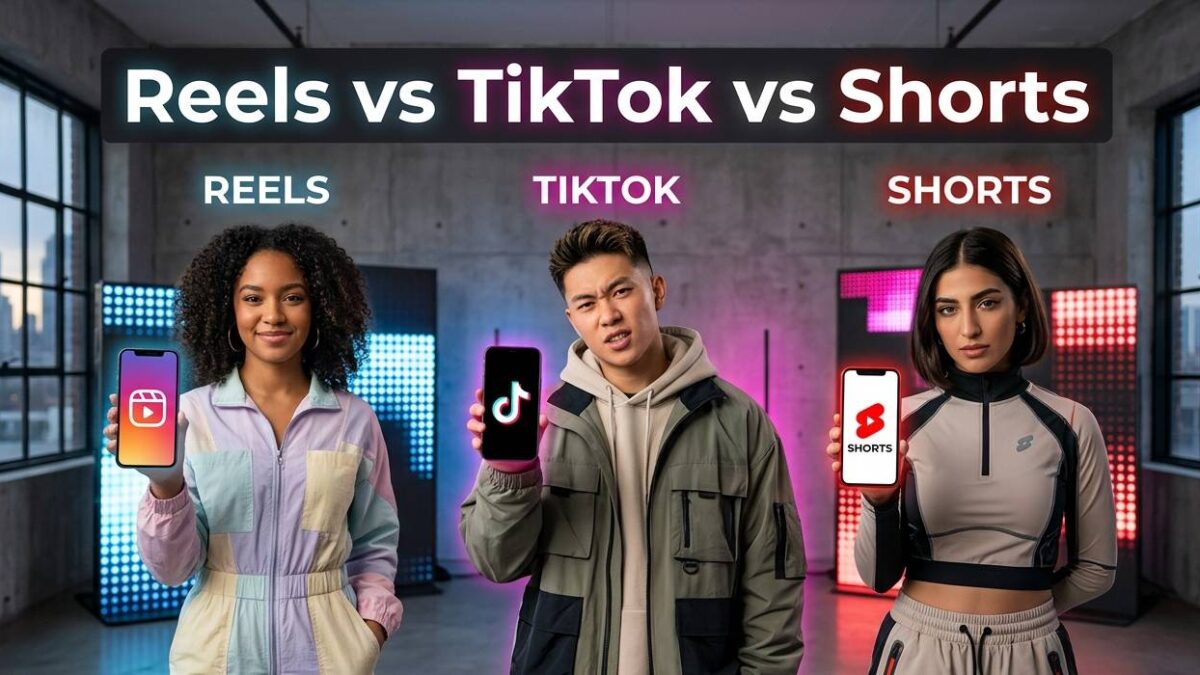

 

Reels vs TikTok vs Shorts

Reels vs TikTok vs Shorts: Best Platform 2026

Reels vs TikTok vs Shorts: Which Platform Wins In 2026?

The digital battlefield of 2026 is defined by one format: vertical, short-form video. The days of debating if you should be producing short videos are over; the only question remaining is where you should be posting them. For business owners and marketing directors, the choice between the “Big Three”—Instagram Reels, TikTok, and YouTube Shorts—can feel paralyzing. Each platform boasts billions of users, sophisticated algorithms, and massive viral potential. Yet, they are not created equal.

A strategy that explodes on TikTok might flatline on Reels. A video that drives sales on Shorts might get ignored on TikTok. To maximize your Video content ROI, you cannot treat these Short-form video platforms as interchangeable. You need a nuanced understanding of their demographics, their algorithms, and their distinct cultures.

At gmmSTUDIOS, we have analyzed millions of data points to bring you this definitive guide. We are going beyond the surface-level comparisons to answer the critical question: In the war of Reels vs TikTok vs Shorts, which platform is the true champion for your business in 2026?

Round 1: The Demographics Game

The first step in any Business marketing strategy is understanding who you are talking to. Social media demographics 2026 have shifted significantly from previous years.

Reels vs TikTok vs Shorts

TikTok: The Pulse of Culture (Gen Z & Alpha)

TikTok remains the stronghold of youth culture, but it has aged up. While still dominated by Gen Z (ages 14-29), the fastest-growing demographic on TikTok is actually users aged 35-50. However, the mindset remains youthful. Users come here for entertainment, raw authenticity, and trend discovery. If your brand is selling “vibes,” fashion, or consumer tech, TikTok is non-negotiable.

Instagram Reels: The Aspirational Millennial Hub

Reels is the home of the Millennial (ages 28-44) and the Gen X user who has adapted to video. The demographic here has higher disposable income and values aesthetics. They are used to the curated life. If your brand relies on visual beauty interior design, luxury travel, high-end beauty—Reels offers a more receptive audience for polished content.

YouTube Shorts: The Information Seekers (Everyone)

YouTube Shorts has the widest age range, spanning from Gen Alpha to Boomers. This is because it sits inside the YouTube ecosystem, which is universally used. However, the intent is different. Users here are often in “learning mode.” They are looking for quick answers, tutorials, or highlights from longer creators they trust.

Winner: It depends. For raw reach to youth, TikTok wins. For purchasing power and aesthetics, Reels wins. For broad, search-based reach, Shorts wins.

Round 2: The Algorithm Comparison Guide

Understanding the “brain” behind the feed is essential. Our Algorithm comparison guide reveals distinct differences in how content is distributed.

The TikTok “Interest Graph”

TikTok’s algorithm is pure meritocracy. It doesn’t care how many followers you have. It tests your content with a small batch of people; if they watch it, it pushes it to more. This gives TikTok the highest Organic reach potential for new accounts. You can literally go from zero to one million views overnight. However, the retention is fickle.

The Instagram Reels “Social Graph”

Instagram still relies heavily on your existing connections. While Reels allows you to reach non-followers, the algorithm favors content that is shared to Stories or DMs. It rewards “social signaling.” It also penalizes low-quality video (blurriness) more harshly than TikTok.

The YouTube Shorts “Search & Watch History”

YouTube’s algorithm is a hybrid of interest and search intent. It suggests Shorts based on the long-form videos a user has watched. If someone watches cooking tutorials, they will see cooking Shorts. This makes YouTube Shorts incredibly powerful for targeted niches. It also has the longest “shelf life” a Short can gain views months after posting because it ranks in search results.

Winner: For viral explosions, TikTok wins. For sustainable, search-driven traffic, YouTube Shorts wins.

Round 3: Business Utility and Conversion

Views are vanity; sales are sanity. Which platform actually drives revenue? This is the core of any Business marketing strategy.

Reels vs TikTok vs Shorts

TikTok for Business

TikTok has integrated robust shopping features (“TikTok Shop”). The path from discovery to purchase is seamless for low-ticket items. However, for B2B or high-ticket services, TikTok is primarily a top-of-funnel awareness tool. You build the hype here, but you might close the sale elsewhere.

Instagram Reels for Branding

Instagram is still the king of brand building. The profile grid acts as a mini-website. When a user discovers you via a Reel, they click through to your profile, see your highlights, and visit your link-in-bio store. The conversion rate for lifestyle brands on Reels is historically higher because the audience is conditioned to “shop the look.”

YouTube Shorts for Funneling

Shorts is the ultimate bridge. It is the best platform for driving traffic to long-form content. If you are a consultant, educator, or B2B service provider (like gmmSTUDIOS), Shorts allows you to hook a viewer and then direct them to a 20-minute video that does the deep selling.

Winner: For e-commerce impulse buys, TikTok. For brand aesthetic and lifestyle sales, Reels. For lead generation and deep nurturing, Shorts.

Round 4: Advertising Costs and ROI

When organic reach isn’t enough, paid media steps in. Let’s look at Video advertising costs.

TikTok ads are generally cheaper in terms of CPM (Cost Per Thousand impressions), but the creative fatigue is high. You need to refresh ads constantly because users spot “fake” content instantly.

Instagram Reels ads are more expensive, but the targeting capabilities (via Meta’s ad manager) are world-class. You can target specific behaviors, interests, and demographics with surgical precision.

YouTube Shorts ads are powered by Google’s data. This allows for intent-based targeting (e.g., showing ads to people who searched for “best video editing software”). This often leads to a higher Video content ROI because you are reaching people who are actively looking for a solution.

Winner: For cheap reach, TikTok. For precise targeting, Reels. For search intent, Shorts.

Strategy: The Power of Cross-Platform Content Repurposing

The smartest businesses don’t choose just one. They use Cross-platform content repurposing. However, you cannot just copy-paste.

gmmSTUDIOS advises a “waterfall” strategy.

  1. Create for TikTok first: It requires the highest energy and authenticity.
  2. Edit for Reels: Remove the TikTok watermark (crucial!), clean up the captions, and perhaps choose a more “aesthetic” cover image.
  3. Optimize for Shorts: Change the title to be search-friendly (keywords!) and add a link to a related long-form video.

This approach ensures you are squeezing every drop of value from your Mobile-first content strategy. You are present everywhere without tripling your workload.

Technical Considerations: Mobile-First Content Strategy

Regardless of the platform, the technical standard for 2026 is high. Brand visibility tactics now rely on quality.

Audience retention rates are the currency of the realm. If your video doesn’t hook the viewer in 3 seconds, it dies on all three platforms. This is why gmmSTUDIOSemphasizes “retention editing”—fast cuts, dynamic captions, and visual pattern interrupts.

You must also consider the “sound-off” environment. While TikTok is sound-on, many Reels users scroll in silence. Your Mobile-first content strategy must include burned-in captions that are legible and engaging.

Final Verdict: Which Platform Wins?

The “winner” of Reels vs TikTok vs Shorts depends entirely on your business model.

  • Choose TikTok if: You are a B2C brand targeting Gen Z, you have a physical product that can go viral (beauty, gadgets, food), or you are comfortable being raw, funny, and unpolished.
  • Choose Reels if: You are a lifestyle, fashion, or luxury brand; you are a local business (restaurants, salons) relying on location tags; or you have an older, wealthier demographic.
  • Choose Shorts if: You are an expert, coach, or B2B company; you have a YouTube channel you want to grow; or your content answers specific questions (tutorials, how-to).

The gmmSTUDIOS Recommendation:

In 2026, the real winner is the brand that builds an ecosystem. Do not build your house on rented land. Use TikTok for awareness, Reels for brand affinity, and Shorts for deep engagement.

If you are overwhelmed by the complexity of managing all three, that is where we come in. gmmSTUDIOS specializes in Short-form video platforms. We handle the strategy, the production, and the Cross-platform content repurposing so you can dominate the feed without the burnout.

The war for attention is happening now. Pick your weapon, or better yet, let us wield them all for you.


Seraphinite AcceleratorOptimized by Seraphinite Accelerator
Turns on site high speed to be attractive for people and search engines.